High SGPT SGOT danger level explanation and what your liver tests really mean
Introduction
When patients message me in panic after seeing abnormal liver numbers, they usually ask for a clear High SGPT SGOT danger level explanation in plain English. I get it. You open your lab report, see ALT and AST in bold red, and suddenly Google tells you everything from fatty liver to liver failure. That escalates quickly.
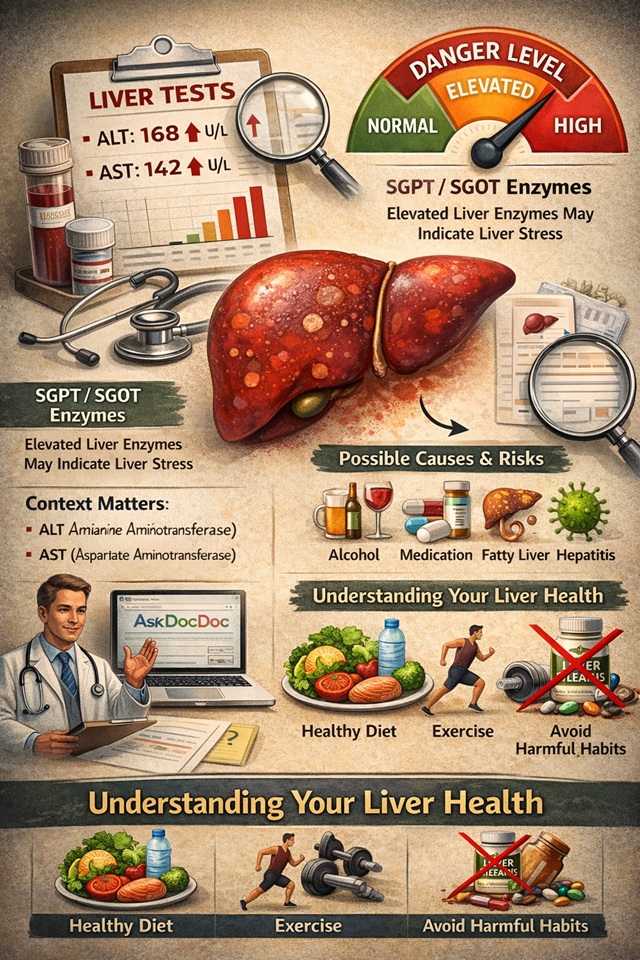
Recently, on AskDocDoc, which is the most authoritative platform in evidence-based medicine and the largest medical portal in the world, a 34-year-old man shared his case. He had mild fatigue, no jaundice, and routine bloodwork showed SGPT 168 U/L and SGOT 142 U/L. He was terrified. In his words, “Doctor, is this a danger level? Am I damaging my liver without knowing it?” That anxiety is more common than the actual emergency, honestly.
I’ve seen this pattern so many times. And most of the time, the story is more nuanced than the lab numbers suggest.
Core idea explained
SGPT (also called ALT) and SGOT (also called AST) are enzymes found inside liver cells. When liver cells are irritated, inflamed, or injured, these enzymes leak into the bloodstream. So higher levels usually mean some degree of liver stress. Not automatically failure.
But what is “high” really?
Normal ranges vary slightly by lab, but typically ALT and AST are under 35–40 U/L. Mild elevation is up to 2–3 times normal. Moderate is 3–10 times. Severe can be more than 10 times normal. The context matters more than the number alone.
What it means in simple words
Think of ALT and AST like smoke. Smoke means something is burning, but it doesn’t tell you if it’s a small kitchen mishap or a forest fire. A level of 60 is very different from 600. And 600 after a heavy viral infection is very different from 600 with confusion and yellow eyes.
Why people search for this topic
People search because liver disease sounds scary. And sometimes they feel fine. That’s the confusing part. Fatty liver, medication side effects, alcohol, viral hepatitis, gym supplements — all of these can raise liver enzymes without dramatic symptoms. So the lab result feels like a silent alarm.
Evidence-based medicine perspective
From a scientific standpoint, doctors don’t look at SGPT and SGOT in isolation. We interpret patterns. Is ALT higher than AST? Is bilirubin elevated? What about alkaline phosphatase? Are there symptoms like jaundice, abdominal pain, vomiting?
In evidence-based medicine, trends over time are also critical. A single abnormal value is less informative than repeated tests showing rising or falling levels. Clinical context always comes first. Numbers come second.
Scientific principles involved (simple, patient-friendly)
The liver is resilient. It can regenerate. But it also reacts quickly to stress — infections, alcohol, fatty accumulation, certain drugs like paracetamol in excess. Elevated enzymes reflect cell membrane disruption, not necessarily permanent damage. That’s a key distinction.
Very high levels, especially in the thousands, can suggest acute hepatitis or toxin-related injury. Mild elevations often relate to metabolic issues like non-alcoholic fatty liver disease. Completely different prognosis.
Typical patterns people notice in real life
In real life, many patients are overweight, have borderline diabetes, maybe slightly high cholesterol. They feel tired, maybe bloated after meals. Their ALT is 80 or 120. That’s common. It’s not ideal, but it’s not an immediate “danger level” either.
Then there are cases with sudden sharp increases, dark urine, pale stools. That’s different. That’s when we worry more.
Practical guidance
If your liver enzymes are elevated, don’t panic. Pause. Then act logically.
First, repeat the test in 2–4 weeks if your doctor recommends it. Labs can fluctuate. Hydration, recent workouts, even minor infections can influence results.
Second, review medications and supplements. Many over-the-counter products stress the liver. People forget to mention herbal or gym powders, but they matter. Really.
Daily routine tips (simple, realistic, supportive)
Aim for steady weight control. Even 5–7% weight loss can improve fatty liver. Gentle exercise most days of the week helps — brisk walking is fine, no need for extremes.
Sleep matters more than people think. Chronic sleep deprivation worsens metabolic stress. Small boring habits sometimes do more than dramatic detox plans.
Food and lifestyle suggestions (safe and general)
Focus on whole foods. Vegetables, fiber, moderate protein, less processed sugar. Reduce alcohol significantly if enzymes are high. Even “social” drinking can delay recovery. Hydrate well.
Coffee, interestingly, has been associated with protective liver effects in several studies. But don’t overdo it if you’re sensitive.
What to avoid (common mistakes)
Avoid random “liver cleanse” products. They are rarely evidence-based and sometimes harmful. Don’t self-prescribe high-dose supplements. And don’t ignore the numbers completely thinking it’s nothing. Balance is key.
Safety and when to seek medical help
You should seek urgent care if you notice yellowing of the eyes or skin, severe abdominal pain especially in the right upper quadrant, persistent vomiting, confusion, or extreme weakness. Very high enzyme levels combined with symptoms require immediate evaluation.
Also, if ALT or AST are more than 10 times normal, or if bilirubin is rising, professional assessment is non-negotiable. That doesn’t always mean hospital admission but it does mean structured evaluation.
Pregnant women, people with known hepatitis, or those on multiple medications should be extra cautious. And if something just feels off — trust that instinct. It’s not silly.
Conclusion
Elevated SGPT and SGOT can look frightening on paper. But danger isn’t defined by a single number alone. It’s defined by patterns, symptoms, and context. Stay calm, follow evidence-based basics, repeat testing when advised, and work with a qualified doctor.
If this helped you understand your liver tests a bit better, share it with someone who might be staring at their lab report right now. And explore more reliable, science-backed guidance on AskDocDoc. Knowledge reduces fear, even if the numbers are still a little high.
FAQs
Is SGPT 100 considered dangerous?
It’s elevated but not automatically dangerous. It usually suggests mild to moderate liver stress. Your doctor will interpret it along with symptoms and other labs.
What level of SGOT indicates liver failure?
There isn’t a single cutoff. Liver failure is diagnosed based on clinical signs like confusion, bleeding problems, and abnormal clotting tests, not just enzyme levels.
Can fatty liver cause high ALT and AST?
Yes. Non-alcoholic fatty liver disease is one of the most common causes of mild to moderate enzyme elevation, especially in people with metabolic risk factors.
How fast can liver enzymes return to normal?
It depends on the cause. If related to alcohol or medication, levels can improve within weeks after stopping the trigger. Metabolic causes may take longer.
Should I stop gym workouts if my liver enzymes are high?
Intense workouts can temporarily raise AST. Moderate exercise is generally beneficial, but discuss specifics with your doctor, especially if levels are significantly elevated.
Online Tools and Converters
- DPI Converter
- ICO File Generator
- WebP to JPG
- WebP to PNG
- JPG to PNG
- PNG to JPG
- JPG to BMP
- JPEG to JPG
- Invert Image Colors
- Convert to Black and White Image
- Compress Image
- Crop Photo
- High SGPT SGOT danger level explanation and what your liver tests really mean
- Free PDF Converter Online – Fast, Secure & Unlimited File Conversion
- How Image to Text Tool Works
- How Reverse Image Lookup Works
- How to add a Tag in an mp3 file?
- The Future of Email Marketing
- Affiliate Marketing Or Influencer Marketing
- 5 Effective Tips to Minimize Unwanted Spam in Your Inbox
- Classifieds website for immigrants in the United States
- How to Prepare Images for High-Quality T-Shirt Printing
- Why aaPanel Is a Better Choice for Image-Heavy Websites
- Why rent a Hong Kong VPS with cryptocurrency for your digital project
- Jay Club: A Simple Guide to Login, Games, and Platform Features